

WHY ITSLEARNING
See why schools choose a European LMS designed for education over generic platforms.
See why schools choose a European LMS designed for education over generic platforms.
itslearning empowers teachers and helps all students reach their full potential.

Translation generated by an AI translation service
Teachers make hundreds of decisions every day. Most of them focus on helping students learn: who needs extra support, what needs to be explained differently, and how to keep the class engaged. Something as simple as the font used on screen can influence how easily students read and understand content.
Font selection will be available across itslearning by the end of June. Administrators can set a default font for the entire site, while teachers and students can choose their preferred font if this option has not been restricted through profile settings.
Typeface legibility has been a subject of scientific research for over a century. A 2019 review published in Vision Research (Legge and Bigelow) traces this field from its earliest focus on the practical effects of typeface on reading, through to current research enabled by digital typography tools, which has produced broader agreement on how type size, width and weight affect legibility. The consistent finding is that font choice affects how easily text can be read, and that the right choice varies by reader and context.
Reading experience is personal. Many students with dyslexia find that a specialist typeface makes text feel more manageable and reduces reading anxiety. Because individual response varies, font choice is best left to the user rather than set as a universal default. Giving students the ability to adjust their reading environment is valuable in itself. A learner who feels more comfortable on the platform is more likely to engage with it.
itslearning offers four typefaces. Each was chosen with a specific purpose.
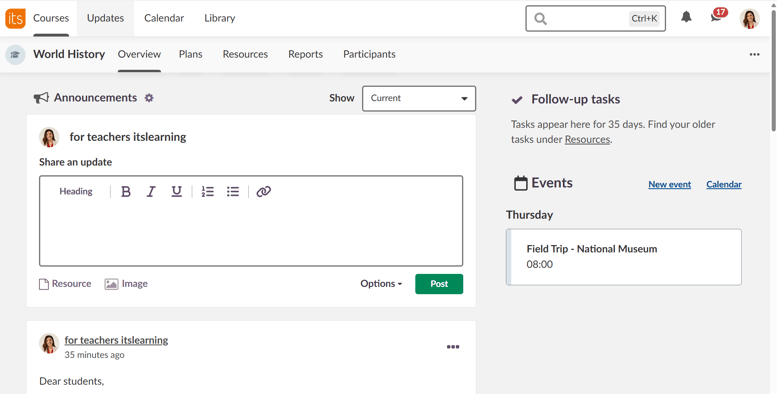
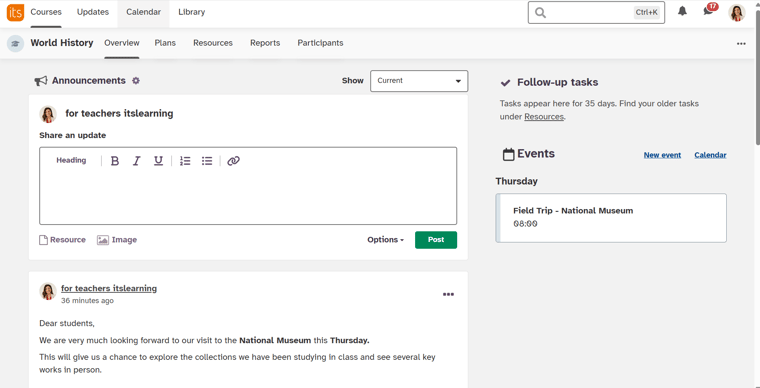
Atkinson Hyperlegible was developed by the Braille Institute specifically for readers with low vision. The font prioritises letterform distinction rather than the uniformity typical of standard typefaces. Design techniques include exaggerated forms for better clarity, wider counter space, and added angled spurs and unique tails, all intended to make characters more recognisable for readers who struggle to distinguish similar letters. It won Fast Company's Innovation by Design Award and is now part of the Cooper Hewitt, Smithsonian Design Museum's permanent collection.
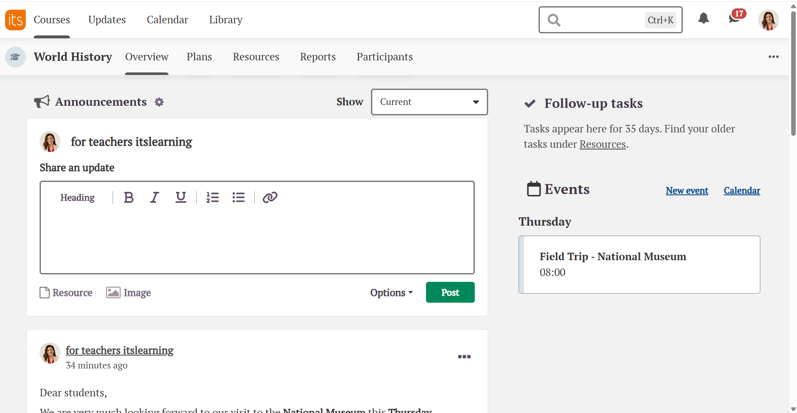
PT Serif is available for users that prefer or require a serif typeface. This may reflect a house style, a pedagogical preference, or the requirements of specific subjects. PT Serif is highly legible and supports a broad range of languages.
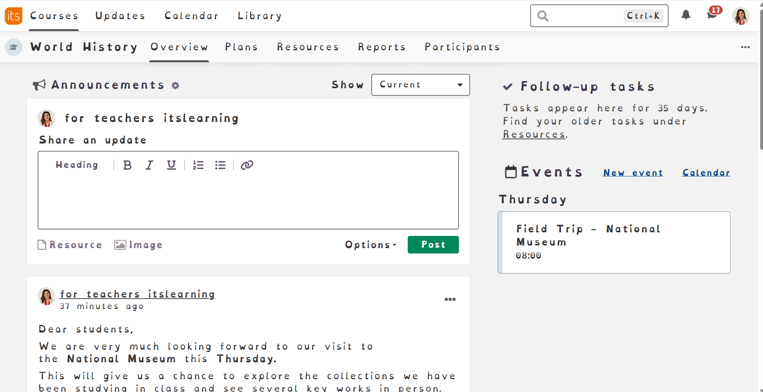
Open Dyslexic is a specialist accessibility font designed to support readers with dyslexia. Its weighted, asymmetric letterforms help anchor characters on the page, making it easier to distinguish letters that are commonly confused. Many users find it reduces reading anxiety and makes sustained reading more comfortable. This font is intended to be selected by the user themselves, based on personal preference and experience. It should not be set as the site-wide default.
Teachers, but also students, can change their display font at any time through their personal settings.
If you support students with identified reading difficulties, it is worth encouraging them to explore the font settings themselves. For a student with dyslexia, Open Dyslexic or Atkinson Hyperlegible can make a real difference to how they experience written content across the platform. Student preference is the most reliable guide.
Font selection is easy to overlook. But for a student who finds standard text difficult to read, the ability to change their display typeface is not a minor convenience. It affects how they read, how long they can concentrate, and how much they take in.
Enabling that option and verifying that your school's settings permit students to use it requires minimal time. For students with reading difficulties, the practical benefit can be significant. It is a straightforward decision with a meaningful impact on accessibility.
For full guidance on font settings, visit the itslearning Support Portal.